
Elevate Your Air Quality Engineering Projects with ClickUp CRM
 25,000+ reviews from
Why Air Quality Engineers Benefit from CRM Software
Managing air quality projects without a CRM is like relying on memory alone to track pollutant data and stakeholder updates. It’s a recipe for missed deadlines and confusion.
Here’s what typically breaks down when air quality engineers juggle tasks manually:
- Client and agency communications get lost — you lose track of who said what and when.
- Permit application timelines slip — critical deadlines and document statuses vanish.
- Sampling schedules become chaotic — missed visits and inconsistent data collection.
- Equipment maintenance and vendor contacts get overlooked — risking costly downtime.
- Regulatory feedback and revisions are buried — making compliance a struggle.
- Data spread across emails, field notes, and spreadsheets — making audits difficult.
- New team members onboard without context — no clear history of client or project interactions.
Unlock Clearer Project Management Than Traditional Methods
Traditional Methods
- Scattered client and government contacts across emails and notes
- No centralized tracking of permit statuses
- Difficult to coordinate sampling and site visits
- Equipment and vendor info scattered
- Regulatory comments buried in messages
- No reminders or follow-up management
- Data and reports fragmented
ClickUp CRM
- Centralized database for all clients, agencies, and vendors
- Visual pipelines for permit applications and renewals
- Automated scheduling for sampling and inspections
- Track equipment maintenance and vendor communications
- Link regulatory feedback directly to projects
- Task reminders ensure no deadlines are missed
- Store and access data and reports within CRM
How CRM Software Supports Air Quality Engineers
Centralize Client, Agency & Field Team Contacts
Manage Permit and Compliance Pipelines
Schedule and Track Field Sampling
Maintain Equipment and Vendor Records
Log Regulatory Feedback and Action Items
Coordinate Multi-Site and Remote Teams
Generate Reports and Audit Trails
Streamline Client and Stakeholder Communication
Turn Site Visits into Actionable Tasks
Who Gains the Most from ClickUp CRM in Air Quality Engineering
If You’re Managing Multi-Agency Projects

If You’re a Field Sampling Coordinator

If You’re a Compliance Specialist
Simplify Your Air Quality Engineering Workflows with ClickUp CRM
Create a Comprehensive Stakeholder Directory
Organize clients, regulators, vendors, and field teams with detailed profiles and communication logs.
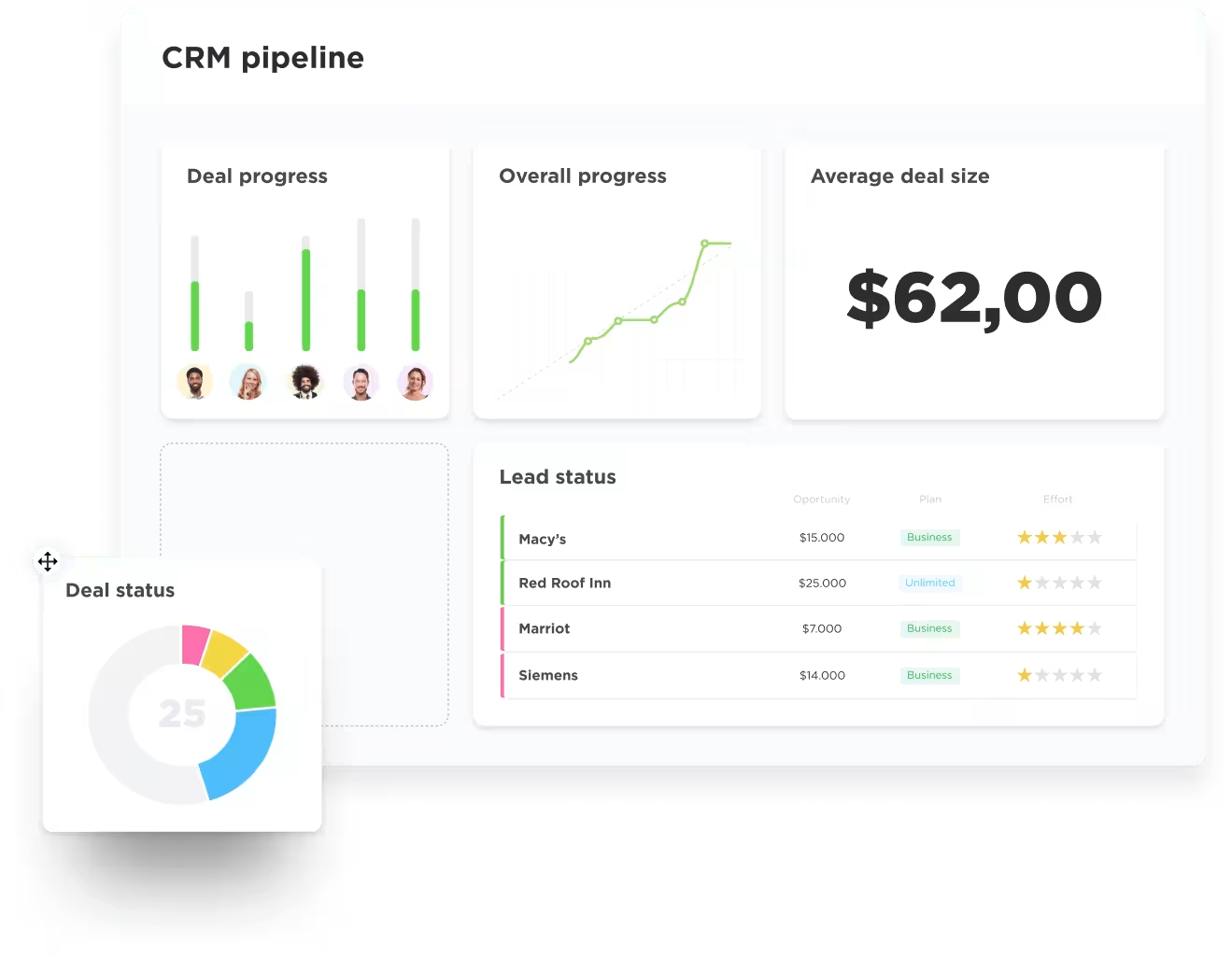
Visualize Permit and Project Progress
Use customizable pipelines to track application stages, inspections, and compliance milestones.
Log Communication and Data Efficiently
Attach emails, meeting notes, and sampling data directly to relevant records.
Turn Conversations into Concrete Tasks
Convert discussions and feedback into actionable tasks with deadlines and responsible owners.
Integrate Documents and Regulatory Forms
Keep all permits, reports, and contracts linked within your CRM for easy access.
Never Miss Critical Deadlines
Set automated reminders and dashboards that highlight upcoming permits, audits, and client meetings.
FAQs on CRM Software for Air Quality Engineers




