Top AI Prompts for Urban Planning Policy
 25,000+ reviews from
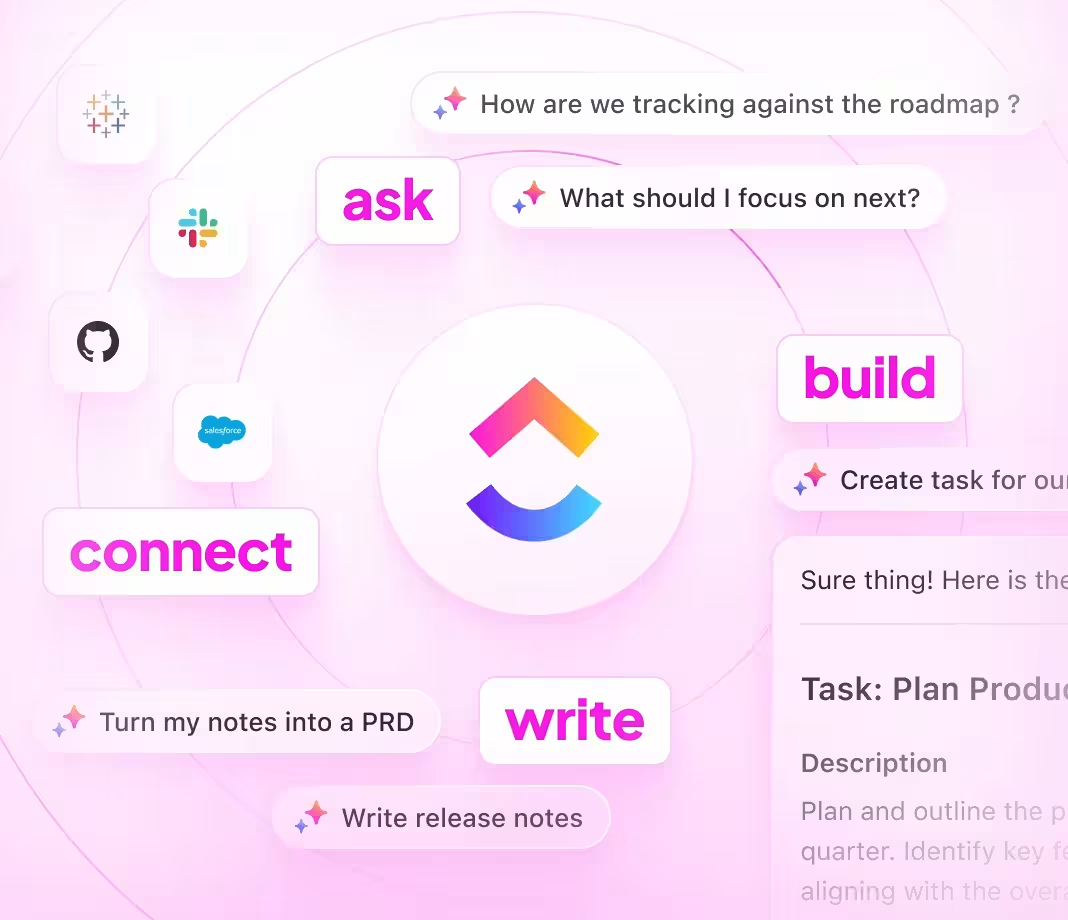
AI Prompts Revolutionizing Urban Planning Policy Workflows
Crafting sustainable and effective urban policies goes beyond zoning maps—it requires managing complex data, stakeholder input, and regulatory frameworks.
From initial community assessments to drafting policy proposals, environmental reviews, and public consultations, urban planning policy demands juggling numerous documents, revisions, and deadlines. AI prompts are now a vital part of this process.
Policy teams leverage AI to:
- Quickly identify relevant case studies and planning precedents
- Generate draft policy language, impact analyses, and stakeholder communications
- Extract key points from dense regulatory texts and reports
- Transform meeting notes into clear action plans, timelines, or compliance checklists
Integrated into daily tools like documents, collaborative boards, and project trackers, AI in platforms such as ClickUp Brain goes beyond simple assistance—it organizes complex inputs into clear, manageable tasks that drive policy development forward.
Why ClickUp Brain Stands Out
Standard AI Platforms
- Constantly toggling between apps to collect data
- Repeating your objectives with every query
- Responses that miss the mark
- Hunting through multiple systems for a single document
- Interacting with AI that only processes input
- Manually switching between different AI engines
- Merely an add-on in your browser
ClickUp Brain
- Deeply connected to your projects, policies, and team communications
- Tracks your previous work and strategic aims
- Provides detailed, relevant guidance
- Consolidated search across all your resources
- Hands-free interaction with voice commands
- Automatically selects the optimal AI model: GPT, Claude, Gemini
- Dedicated desktop app for Mac & Windows optimized for performance
15 Strategic AI Prompts for Urban Planning Policy
Identify five innovative zoning reform ideas for mixed-use neighborhoods, based on insights from the ‘Spring 2025 Policy Review’ document.
ClickUp Brain Behavior: Analyzes policy documents to extract key reform proposals and suggests actionable planning directions.
What affordable housing policy measures are gaining traction in metropolitan areas with budgets under $500K?
ClickUp Brain Behavior: Integrates findings from internal policy briefs; Brain Max can supplement with relevant public data when accessible.
Develop a policy framework for expanding urban green spaces, referencing the ‘Nordic Urban Planning’ report and prior strategy notes.
ClickUp Brain Behavior: Extracts key recommendations and compiles a structured policy draft from linked documents.
Summarize differences in public transit funding strategies between New York City and San Francisco using the ‘Transit Budgets Q2’ report.
ClickUp Brain Behavior: Pulls data tables and narrative insights from internal files to deliver a concise comparative analysis.
Identify leading sustainable construction materials referenced in recent urban development policies, drawing from R&D and supplier documents.
ClickUp Brain Behavior: Reviews internal resources to list frequently mentioned materials and their environmental benefits.
From the ‘Pedestrian Safety Standards’ document, generate a detailed checklist for policy compliance and enforcement.
ClickUp Brain Behavior: Extracts regulatory criteria and formats them into a clear, actionable checklist within a task or document.
Outline three key trends in smart city technology integration based on recent user studies and technical reviews post-2024.
ClickUp Brain Behavior: Identifies recurring themes and innovations from linked research and technical documents.
Summarize major community feedback themes regarding public space design from the ‘Community Survey Q1’ document.
ClickUp Brain Behavior: Analyzes survey data to extract common preferences and concerns expressed by residents.
Write clear and approachable public announcement copy for upcoming zoning revisions, guided by the ‘CommunicationTone.pdf’ style guide.
ClickUp Brain Behavior: Utilizes tone references to generate multiple copy options suited for public communication.
Outline key modifications in 2025 environmental policies and their implications for urban planning and construction.
ClickUp Brain Behavior: Condenses regulatory documents and highlights critical compliance points; Brain Max can add updates from public sources if available.
Develop placement and sizing protocols for urban signage compliant with regional accessibility laws, referencing local codes in our workspace.
ClickUp Brain Behavior: Extracts relevant rules and compiles a standards checklist for policy implementation.
Create a comprehensive checklist for urban emergency response policies using federal guidelines and local planning documents.
ClickUp Brain Behavior: Identifies key requirements and organizes tasks by emergency type and priority level.
Summarize and contrast sustainability programs like waste reduction and energy efficiency in cities such as Seattle, Austin, and Denver.
ClickUp Brain Behavior: Synthesizes comparative data into an accessible summary or tabular format.
Highlight recent urban design developments shaping policy decisions, based on research notes and concept reports from 2023 onward.
ClickUp Brain Behavior: Extracts and summarizes prevailing trends from internal documents and studies.
Analyze user feedback from Southeast Asia’s transit systems to identify main usability issues including accessibility, scheduling, and safety.
ClickUp Brain Behavior: Prioritizes and compiles user-reported problems from surveys, feedback forms, and service tickets.

LLMs vs. Workflow Intelligence: How ClickUp Brain Enhances Urban Planning
Prompts for ChatGPT
- Outline a 5-point policy brief from these urban development proposals focusing on sustainability and community impact.
- Compose public communication for a new green zoning initiative highlighting environmental and social benefits.
- Develop 3 alternative street design concepts for a pedestrian-friendly district emphasizing safety and accessibility.
- Draft a phased implementation plan for integrating smart traffic management in a mid-sized city.
- Analyze recent affordable housing projects and summarize key resident feedback to inform future policies.
Prompts for Gemini
- Generate 3 urban park layout options based on community input and ecological considerations.
- List innovative public transit solutions aimed at reducing carbon emissions and improving user experience.
- Create a descriptive mood board for a revitalized downtown area emphasizing cultural vibrancy and green spaces.
- Propose ergonomic street furniture designs for busy pedestrian zones and rank them by comfort and durability.
- Develop a comparative table of zoning regulations across three cities focusing on density, green space, and mixed-use development.
Prompts for Perplexity
- Identify 5 sustainable building materials suitable for urban housing and rank them by cost-effectiveness.
- Compare renewable energy integration methods in urban infrastructure, focusing on scalability and impact.
- Summarize global trends in smart city technologies and their adoption rates among municipalities.
- List 5 innovative waste management strategies for urban areas and evaluate their practicality.
- Review past urban renewal projects and extract 3 key lessons to guide future planning efforts.
Prompts for ClickUp Brain
- Transform this community feedback compilation into prioritized planning and policy tasks.
- Summarize workshop discussions and assign follow-up actions with responsible teams and deadlines.
- Review annotated site plans and generate a checklist for engineering and environmental assessments.
- Create a task list from interdepartmental meetings on transit improvements, including urgency and resource allocation.
- Summarize resident survey transcripts for public space upgrades and produce actionable design and maintenance tasks in ClickUp.
Transform Early Concepts Into Detailed Plans
- Convert initial sketches into polished policy drafts swiftly.
- Generate innovative strategies by analyzing previous urban projects.
- Build customizable templates to accelerate policy development.
Brain Max Boost: Quickly access historical plans, community feedback, and regulatory documents to fuel your next urban policy idea.

Accelerate Urban Planning Decisions
- Break down intricate policy debates into manageable tasks.
- Transform planning insights into actionable assignments.
- Automatically create comprehensive reports and policy briefs without extra effort.
Brain Max Boost: Instantly access historical zoning data, regulatory comparisons, or project documentation across initiatives.

How AI Prompts Elevate Every Phase of Urban Planning Policy
Create Impactful Policy Ideas Quickly
Urban planners explore diverse strategies rapidly, make informed policy choices, and overcome analysis paralysis.
Enhance Decision-Making with Data
Identify Issues Early to Save Resources
Align Stakeholders Seamlessly
Drive Forward-Thinking Urban Solutions
Integrated AI Support Within ClickUp