Top AI Prompts to Boost Remote Team Connection
 25,000+ reviews from
Boost Remote Team Engagement with AI-Powered Prompts
Keeping remote teams connected goes beyond video calls—it's about fostering meaningful interactions and clear workflows.
From virtual brainstorming to task tracking and feedback loops, managing distributed teams demands constant coordination and communication. AI prompts are stepping in to simplify these challenges.
Remote teams leverage AI to:
- Quickly generate engaging meeting agendas and icebreakers
- Craft clear, concise updates and action items from discussions
- Highlight key points from lengthy chat threads or documents
- Transform scattered ideas into prioritized task lists and follow-ups
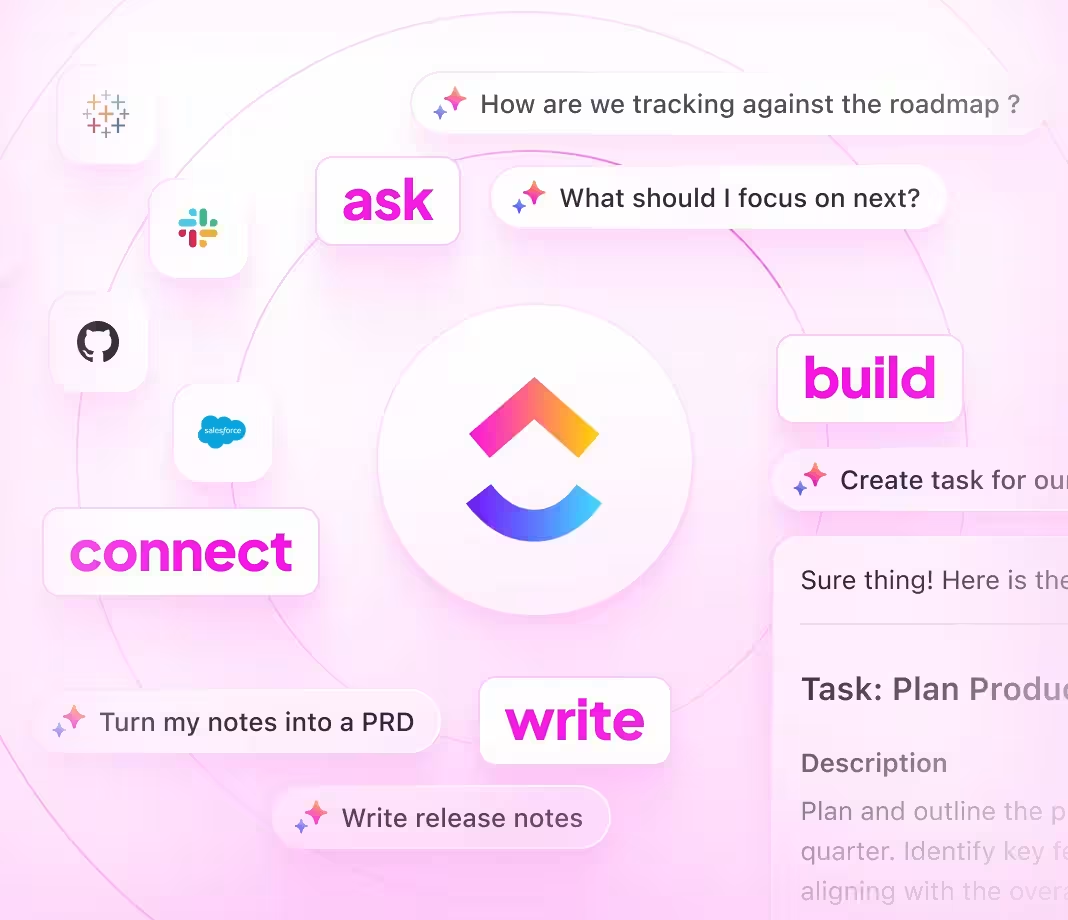
Integrated within daily tools like docs, chat, and project boards, AI in ClickUp Brain acts as a proactive collaborator—turning scattered conversations into focused, productive outcomes.
Why ClickUp Brain Stands Out
Conventional AI Platforms
- Constantly toggling between apps to collect information
- Repeating your objectives with every query
- Receiving generic, irrelevant feedback
- Hunting through multiple platforms for a single document
- Interacting with AI that only processes input passively
- Manually switching among different AI models
- Merely another add-on in your browser
ClickUp Brain
- Seamlessly understands your projects, notes, and team communications
- Retains your previous interactions and targets
- Provides detailed, context-driven solutions
- Offers comprehensive search across all your resources
- Enables voice commands through Talk to Text
- Automatically selects the optimal AI engine: GPT, Claude, Gemini
- Dedicated desktop apps for Mac & Windows designed for efficiency
15 Essential AI Prompts to Boost Remote Team Connection
List 5 innovative icebreaker activities tailored for remote teams, inspired by recent engagement surveys.
ClickUp Brain Behavior: Analyzes survey data and team feedback documents to suggest fresh, effective icebreaker ideas.
What collaboration platforms are gaining popularity among small remote teams with limited budgets?
ClickUp Brain Behavior: Aggregates insights from market research and user reviews; Brain Max can supplement with current public data.
Create a structured agenda template promoting participation and inclusivity, referencing best practices and prior meeting notes.
ClickUp Brain Behavior: Extracts key points from linked documents to generate a clear, actionable agenda format.
Analyze recent internal reports comparing communication hurdles faced by teams across different time zones.
ClickUp Brain Behavior: Synthesizes findings from documents and presents a concise overview of main obstacles.
Identify effective recognition methods used by remote companies, referencing HR guidelines and case studies.
ClickUp Brain Behavior: Reviews internal resources to compile a list of proven appreciation tactics.
From past event plans, create a detailed checklist covering logistics, participation, and follow-up steps.
ClickUp Brain Behavior: Extracts essential tasks and organizes them into a comprehensive planning guide.
Highlight recent wellness initiatives that support remote employees’ mental and physical health.
ClickUp Brain Behavior: Identifies patterns from research reports and wellness program documentation.
Summarize feedback on preferred software features and usability from distributed team members.
ClickUp Brain Behavior: Analyzes survey data to reveal common themes and user priorities.
Craft friendly, concise messaging encouraging team members to join casual online meetups, using tone guidelines.
ClickUp Brain Behavior: Incorporates style references to produce inviting and approachable text variations.
Review recent compliance changes and their implications for remote collaboration tools.
ClickUp Brain Behavior: Extracts key points from policy documents and presents a clear summary.
Using internal compliance documents, create a checklist ensuring meetings accommodate diverse needs.
ClickUp Brain Behavior: Pulls relevant standards and recommendations to form actionable guidelines.
Design a structured feedback form to gather insights on meeting effectiveness and participant experience.
ClickUp Brain Behavior: Synthesizes best practices and prior feedback samples into a reusable template.
Summarize documented onboarding approaches focusing on engagement and integration for new remote hires.
ClickUp Brain Behavior: Presents a clear comparison highlighting strengths and unique methods.
Review recent innovations in messaging and video platforms that improve remote collaboration.
ClickUp Brain Behavior: Extracts trends from tech reviews and internal analyses.
Analyze feedback from diverse regions to highlight frequent issues in remote work setups.
ClickUp Brain Behavior: Prioritizes concerns and suggests focus areas based on aggregated responses.

Remote Team Engagement with ClickUp Brain AI Prompts
ChatGPT Engagement Prompts
- Outline five key strategies to boost remote team morale using ClickUp Brain insights.
- Compose an inviting message template for virtual team-building activities that emphasize inclusivity.
- Suggest three innovative ways to recognize remote employee achievements and explain their impact.
- Develop a stepwise plan for organizing a remote brainstorming session using ClickUp's collaboration tools.
- Summarize feedback from recent virtual meetings to identify common engagement challenges and solutions.
Gemini Collaboration Prompts
- Propose three creative virtual icebreaker activities tailored for diverse remote teams.
- Compile a list of effective communication practices to enhance clarity and reduce misunderstandings remotely.
- Describe an ideal remote workspace setup focusing on comfort, productivity, and team connectivity.
- Recommend seating and scheduling arrangements for virtual workshops to maximize participation and energy.
- Create a comparison chart of remote engagement tools highlighting features, ease of use, and integration with ClickUp.
Perplexity Insight Prompts
- Identify five digital tools that promote sustainable remote work culture and rank them by adoption ease.
- Analyze trends in remote employee engagement and summarize key factors driving team cohesion.
- Review global best practices for virtual leadership and their effectiveness in distributed teams.
- List five innovative methods to manage remote team workloads and prioritize tasks efficiently.
- Compare previous remote engagement campaigns and highlight top three tactics for future success.
ClickUp Brain Action Prompts
- Transform this virtual team feedback into clear action items with assigned owners and deadlines.
- Extract key points from remote meeting transcripts and create follow-up tasks in ClickUp.
- Review annotated project notes and generate a checklist for remote collaboration improvements.
- Compile tasks from cross-department discussions on enhancing virtual communication, prioritizing urgency.
- Summarize user survey responses on remote work challenges and produce actionable steps for team leads.
Transform Your Ideas into Clear Plans
- Quickly convert scattered thoughts into polished project outlines.
- Generate new concepts by tapping into previous team experiences.
- Build custom templates that accelerate your workflow consistently.
Brain Max Boost: Effortlessly explore past projects, team comments, and resource files to fuel your upcoming initiatives.

Accelerate Remote Team Collaboration
- Break down lengthy virtual meetings into concise, actionable items.
- Transform brainstorming sessions into organized, assignable tasks.
- Automatically compile engagement summaries and progress reports without extra effort.
Brain Max Boost: Instantly access previous team interactions, project milestones, or communication threads across all remote workflows.

How AI Prompts Elevate Remote Team Engagement
Spark Instant Team Interaction Ideas
Remote leaders inspire fresh engagement tactics, encourage open dialogue, and prevent communication lulls.
Enhance Decision-Making Across Locations
Identify Engagement Gaps Early
Align Every Member with Shared Goals
Cultivate Innovative Remote Practices
Integrate AI Prompts Seamlessly in ClickUp