Top AI Prompts for Budget Review Excellence
 25,000+ reviews from
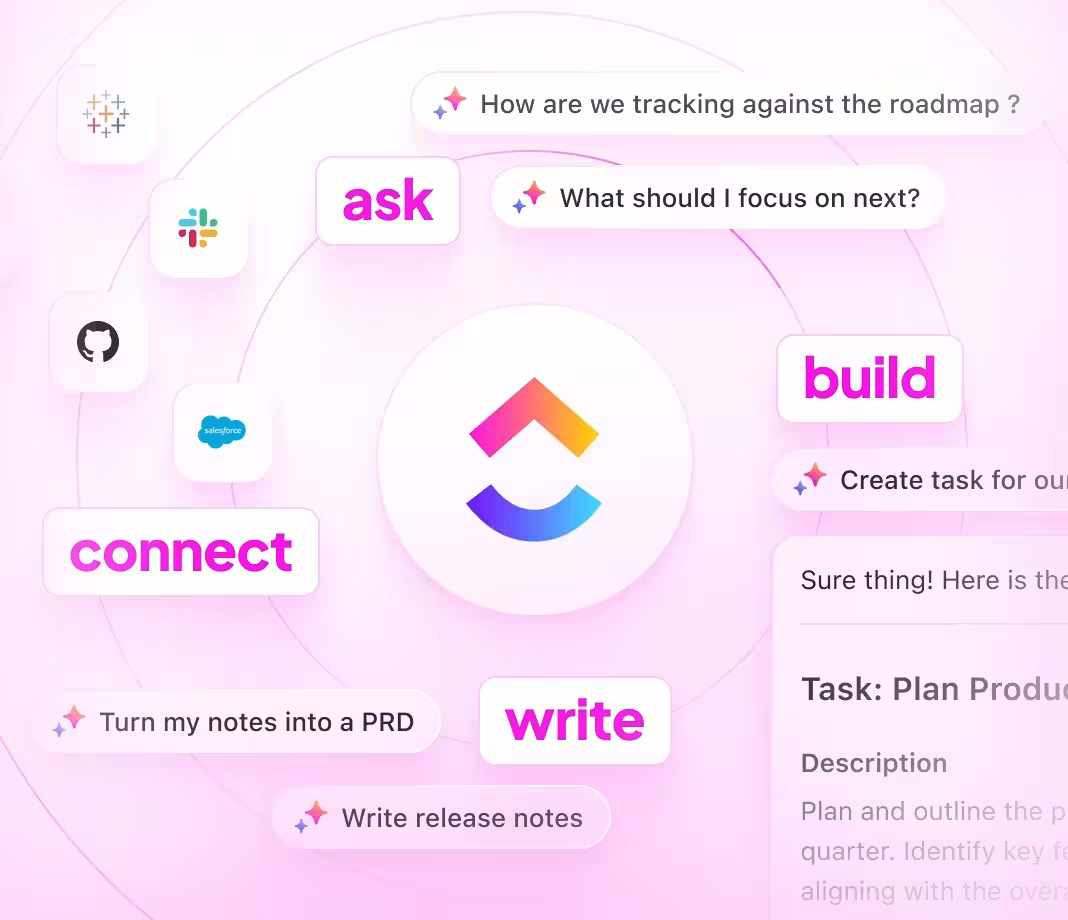
Revolutionizing Operational Budget Reviews with AI Prompts
Managing your organization's budget isn't just about numbers—it's about aligning resources with strategic goals.
Operational budget reviews require juggling multiple data sources, forecasts, and departmental inputs, alongside strict deadlines and compliance standards. AI prompts are now pivotal in simplifying this complex process.
Finance teams leverage AI to:
- Quickly identify spending patterns and budget variances
- Generate detailed budget reports and forecasts from minimal data
- Interpret regulatory guidelines and financial policies efficiently
- Transform meeting notes into clear action plans, checklists, or budget adjustments
Integrated into familiar tools like documents, dashboards, and project trackers, AI in ClickUp Brain goes beyond basic assistance. It actively organizes financial insights into clear, executable steps that drive smarter budget decisions.
Why ClickUp Brain Stands Apart
Conventional AI Solutions
- Constantly toggling between apps to collect details
- Repeating your objectives with every query
- Receiving generic, irrelevant feedback
- Hunting through multiple platforms for a single document
- Interacting with AI that lacks engagement
- Manually switching between different AI models
- Merely another add-on in your browser
ClickUp Brain
- Deeply connected to your tasks, documents, and team communications
- Retains your project history and objectives
- Provides detailed, practical insights
- Offers a centralized search across all your resources
- Enables voice commands with Talk to Text
- Automatically selects the optimal AI model: GPT, Claude, Gemini
- Dedicated Mac & Windows app designed for efficiency
15 Essential AI Prompts for Budget Analysis with ClickUp Brain
Identify 5 innovative cost reduction approaches for Q3, based on the ‘Operational Budget Q3 2024’ document.
ClickUp Brain Behavior: Analyzes budget reports and notes to propose actionable savings strategies tailored to your data.
Analyze recent spending patterns in manufacturing under $10M budgets across North America.
ClickUp Brain Behavior: Integrates internal financial reports and external market data to highlight key expense trends and shifts.
Create a detailed budget distribution plan for scaling remote teams, referencing ‘Remote Work Expansion’ docs and prior financial plans.
ClickUp Brain Behavior: Extracts relevant figures and strategic notes to assemble a clear, actionable budget plan.
Compare pricing and service levels from top IT vendors using the ‘Vendor Cost Analysis Q2’ document.
ClickUp Brain Behavior: Pulls data tables and narrative insights to deliver a concise vendor cost and value summary.
Identify main variable expenses affecting production budgets, referencing R&D and procurement notes.
ClickUp Brain Behavior: Scans internal documents to list recurring cost drivers and their financial impact.
From the ‘Budget Compliance Guidelines’ doc, create a step-by-step audit checklist for operational budgets.
ClickUp Brain Behavior: Extracts compliance criteria and formats them into a structured, actionable checklist.
Highlight automation trends that cut costs, based on recent internal research and industry reports.
ClickUp Brain Behavior: Identifies patterns and recommendations from linked documents to suggest automation use cases.
Analyze employee expense habits and highlight areas for policy improvement.
ClickUp Brain Behavior: Reviews survey data to extract common themes and actionable insights.
Craft concise notification messages for budget approvals, aligned with the tone in ‘CorporateVoice.pdf’.
ClickUp Brain Behavior: References tone guidelines to generate user-friendly and motivating notification text.
Outline recent compliance updates and their implications on budget planning, referencing internal legal docs.
ClickUp Brain Behavior: Synthesizes regulatory content to highlight key adjustments needed in budgeting.
Extract reporting standards and formatting rules from regional compliance documents.
ClickUp Brain Behavior: Compiles measurement criteria and documentation requirements into a clear checklist.
Using US financial regulations and internal risk reports, develop a checklist to evaluate budget forecast risks.
ClickUp Brain Behavior: Identifies risk factors and organizes them into a practical assessment tool.
Analyze and summarize how Tesla, Ford, and GM allocate funds toward sustainability initiatives.
ClickUp Brain Behavior: Converts competitive budget data into an easy-to-read comparison table or summary.
Identify recent shifts in budgeting approaches among tech startups, based on internal and external reports.
ClickUp Brain Behavior: Synthesizes trend data to reveal evolving financial strategies and priorities.
Extract and prioritize operational budget challenges reported by teams in Southeast Asia.
ClickUp Brain Behavior: Analyzes survey responses and feedback to highlight common pain points and improvement areas.

AI Prompts for Operational Budget Review with ClickUp Brain
ChatGPT Budget Review Prompts
- Summarize the quarterly expense reports into a concise 5-point overview highlighting key cost drivers.
- Draft an executive summary for the upcoming budget proposal emphasizing savings and investment areas.
- Generate 3 alternative budget allocation scenarios for the marketing department and outline potential impacts.
- Write a step-by-step guide for conducting variance analysis between planned and actual expenditures.
- Compare last 3 fiscal year budgets and summarize major shifts in spending priorities.
Gemini Budget Analysis Prompts
- Generate 3 alternative forecasting models for next year's operational costs based on historical data.
- List innovative cost-saving strategies tailored for manufacturing teams with a focus on efficiency.
- Produce a mood board description for a financial dashboard highlighting key performance indicators and visual themes.
- Suggest budget reallocation plans for cross-department projects and rank them by expected ROI.
- Create a comparison table for three budget proposals focusing on risk, benefit, and resource allocation.
Perplexity Budget Insights Prompts
- List 5 emerging trends in operational budgeting and rank them by potential impact.
- Provide a comparison of budgeting software tools focusing on features, user-friendliness, and integration.
- Summarize global best practices in budget review meetings and their effectiveness.
- Generate a list of 5 common budgeting pitfalls and rank them by frequency and cost.
- Compare past budget review outcomes and summarize top 3 lessons for improving accuracy.
ClickUp Brain Budget Prompts
- Transform this budget review discussion into clear, actionable tasks with assigned owners and deadlines.
- Summarize financial meeting notes and create follow-up action items prioritized by impact.
- Analyze annotated budget spreadsheets and generate a checklist of items needing further review.
- Create a task list from cross-department budget alignment conversations, including priority and dependencies.
- Summarize audit feedback transcripts and generate actionable tasks for compliance and process improvements in ClickUp.
Transform Initial Thoughts Into Polished Plans
- Convert scattered budget notes into clear, actionable reports swiftly.
- Generate innovative budget strategies by analyzing previous financial data.
- Build customizable templates that accelerate every review cycle.
Brain Max Boost: Quickly access prior budgets, stakeholder comments, and financial documents to guide your upcoming review.

Accelerate Budget Review Processes
- Break down detailed budget talks into precise, actionable items.
- Transform financial notes into tasks ready for assignment.
- Automatically produce comprehensive budget summaries and reports without extra effort.
Brain Max Boost: Instantly access historical budget figures, expense comparisons, or financial decision records across all projects.

How AI Prompts Elevate Every Phase of Budget Review
Produce Insightful Budget Scenarios Quickly
Finance teams explore diverse budget options rapidly, make informed choices, and avoid decision bottlenecks.
Enhance Fiscal Decision-Making
Drive better financial outcomes, reduce overspending, and align budgets with organizational goals.
Identify Errors Before They Impact Results
Minimizes expensive corrections late in the cycle, boosts accuracy, and accelerates approval timelines.
Align Stakeholders Seamlessly
Improves communication, prevents misunderstandings, and expedites consensus among finance, operations, and management.
Unlock Innovative Budget Strategies
Encourages creative cost-saving ideas, supports scenario planning, and keeps your budget adaptive.
Integrated AI Support Within ClickUp
Transforms AI insights into actionable tasks that keep your budget review on track.