Mastering AI-Powered Job Description Creation
 25,000+ reviews from
Discover the AI Job Description Generator
An AI Job Description Generator automates the creation of job postings by analyzing your organizational data and recruitment needs. Traditionally, HR teams spent hours drafting descriptions, manually aligning roles with company expectations, and iterating through multiple revisions.
AI revolutionizes this process by generating tailored job descriptions from simple prompts. For example, you can instruct, “Create a job description for a senior software engineer specializing in cloud infrastructure,” and receive a polished draft instantly.
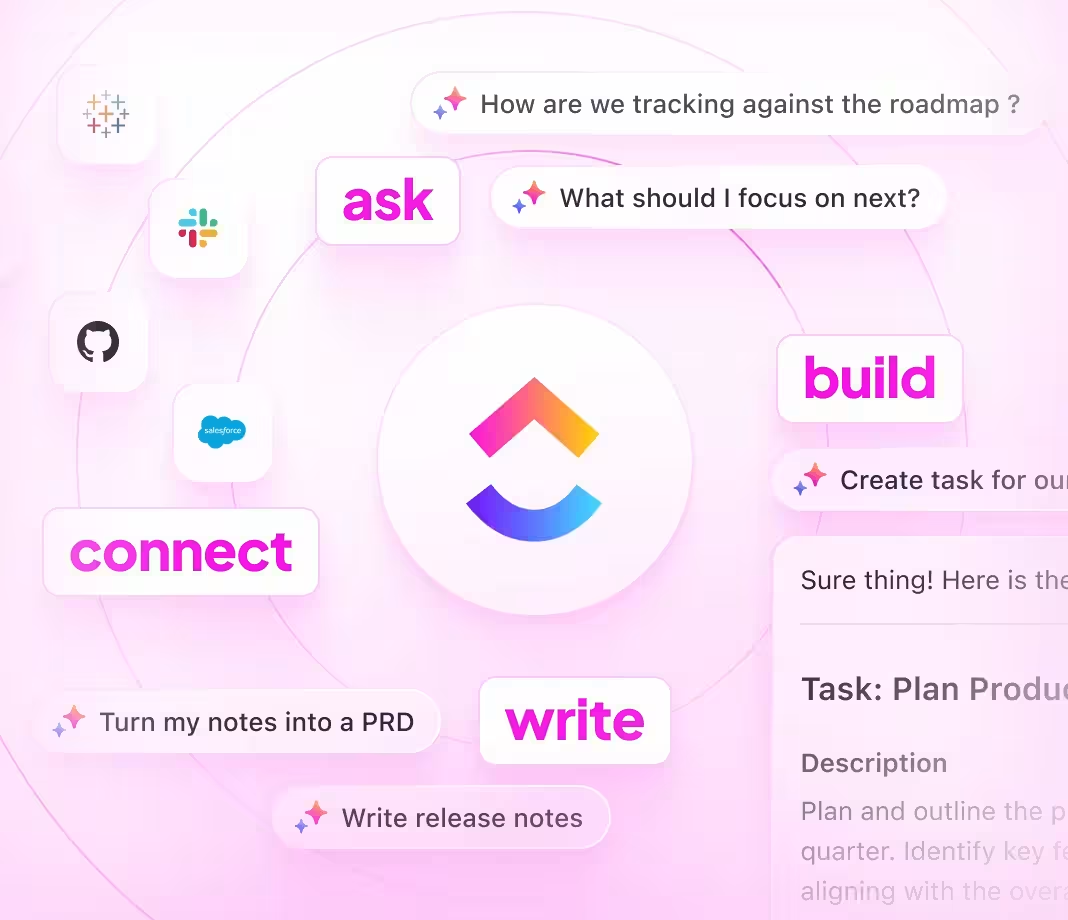
Integrated with ClickUp Brain and Brain Max, this AI tool not only drafts but continuously refines job descriptions based on evolving team structures and market trends, ensuring your recruitment content stays relevant and competitive.
Why ClickUp Brain Redefines Job Description Generation
Conventional Tools
- Manual Drafting: HR professionals write job descriptions from scratch or use static templates.
- Fragmented Process: Involves multiple tools like Word processors and spreadsheets, causing version confusion.
- Limited Customization: Templates often lack flexibility to reflect unique role requirements.
- Time Intensive: Drafting, reviewing, and revising consume valuable time.
- Static Content: Job descriptions quickly become outdated without automation.
ClickUp Brain
- Embedded AI: Generates job descriptions directly within your ClickUp workspace.
- Context-Aware: Leverages current team data, role specifics, and company culture.
- Dynamic Updates: Job descriptions evolve automatically with role changes.
- Collaboration Friendly: Enables real-time editing and feedback among HR and hiring managers.
- Brain Max Enhancements: Customize AI logic to suit specialized recruitment needs.
Crafting an AI-Driven Job Description in ClickUp
1. Gather Role Insights from Your Workflow
Traditional approach: Manually collect role requirements, responsibilities, and qualifications from various sources.
With ClickUp Brain:
AI scans your project tasks, team roles, and previous job descriptions to assemble accurate role profiles instantly. Just prompt: “Generate a job description for our new marketing manager role.”
2. Let AI Tailor the Description
Traditional approach: HR drafts generic descriptions that may not align with actual team needs.
With ClickUp Brain:
The AI refines the description using current team dynamics, desired skills, and company values extracted from your workspace, ensuring relevance and appeal.
3. Customize Format and Tone Visually
Traditional approach: Limited formatting options in static documents.
With ClickUp Brain:
Use integrated editing tools to adjust language style, bullet points, and sections. Brain Max can suggest inclusive language and keyword optimization for better candidate engagement.
4. Publish and Update Automatically
Traditional approach: Job descriptions sit in separate files and require manual updates.
With ClickUp Brain:
Descriptions sync with your hiring workflows and update dynamically as roles evolve, keeping posting content fresh without extra effort.






Three Impactful Ways to Use the AI Job Description Generator
Accelerated Hiring for High-Growth Companies
Recruiters use AI-generated job descriptions to quickly adapt hiring needs to rapid company scaling, ensuring role clarity and attracting qualified candidates without delays.
This live, up-to-date job content supports fast recruitment cycles and strategic workforce planning.

Streamlining Diversity and Inclusion Initiatives
HR teams employ AI to create unbiased, inclusive job descriptions by analyzing language and suggesting improvements, promoting equitable candidate attraction and compliance with best practices.
ClickUp Brain Max enhances this by customizing inclusivity criteria tailored to your organization's values.

Optimizing Role Clarity in Complex Organizations
In large enterprises, AI helps define nuanced role responsibilities and reporting structures within job descriptions, reducing ambiguity and improving candidate fit.
This minimizes onboarding friction and supports strategic talent management.