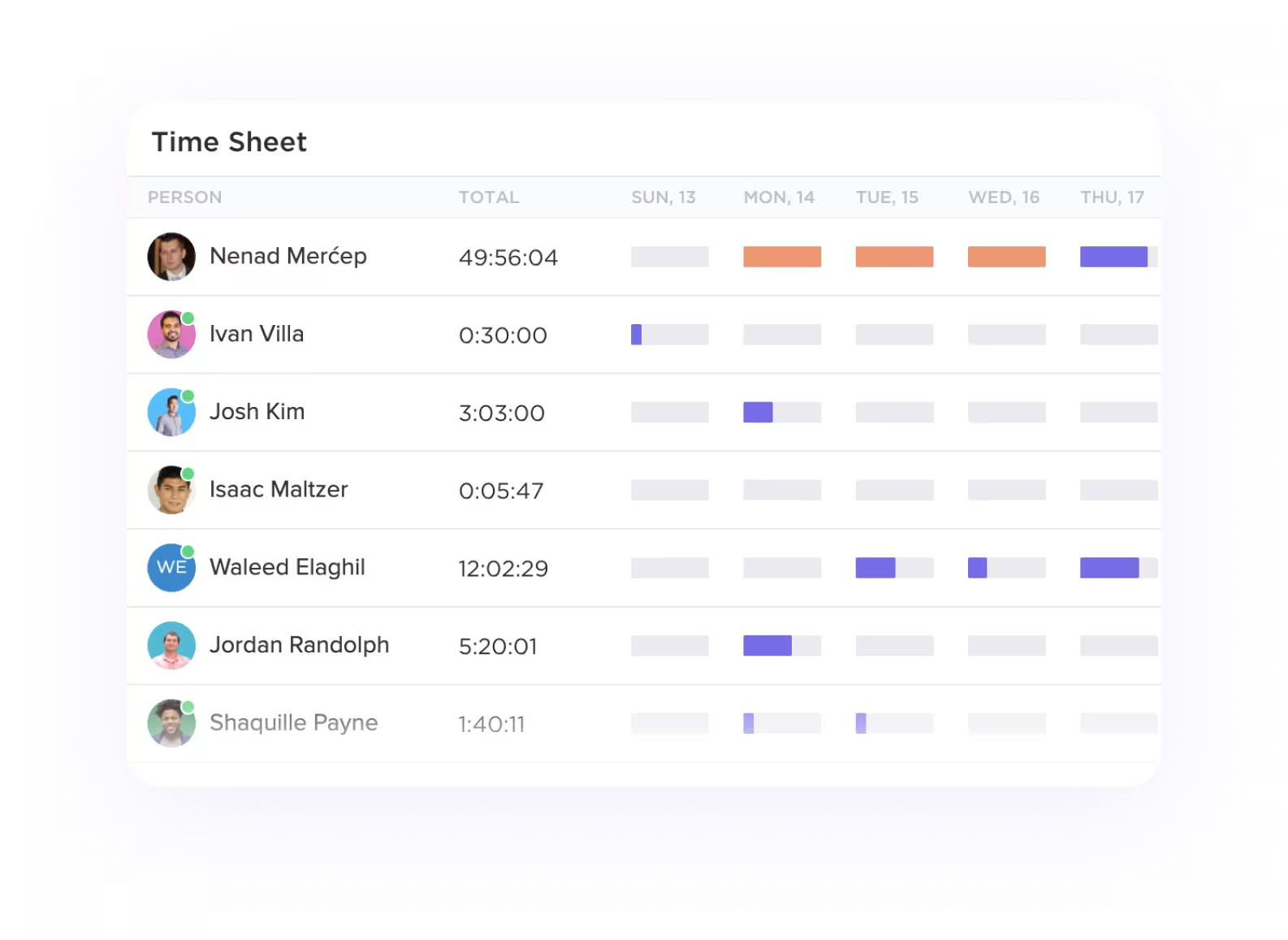
Build and customize time sheets.
View your time tracked by day, week, month, or any custom range with detailed time sheets. Show time totals grouped by dates and see individual tasks and time entries for a deeper look at where time was spent.

Maximize productivity and streamline your customer service team's workflow with the best time tracking software on the market. ClickUp's intuitive features allow you to easily track time spent on tasks, analyze productivity trends, and ensure efficient project management. Say goodbye to manual time tracking and hello to a more organized and productive customer service team with ClickUp.
Free forever.
No credit card.
Trusted by the world’s leading businesses
View your time tracked by day, week, month, or any custom range with detailed time sheets. Show time totals grouped by dates and see individual tasks and time entries for a deeper look at where time was spent.

Get a high level view of your team's time tracking and compare it against the time estimated. See the amount of time remaining for each person's task to determine if you're on schedule to hit your goals.

Time tracking in customer service can help manage customer inquiries and issues efficiently by assigning tickets, tracking their status, and ensuring timely resolution. By tracking the time spent on each ticket, teams can prioritize effectively and allocate resources where they are most needed.
Implementing time tracking in customer self-service options such as FAQ sections or knowledge bases can help businesses understand which resources are most accessed and where customers may be encountering challenges. This data can guide improvements in self-service offerings, leading to faster issue resolution and increased customer satisfaction.
Using time tracking in feedback collection allows businesses to monitor how much time is spent on gathering and organizing customer feedback. This insight can help in identifying areas that need improvement, addressing customer concerns promptly, and enhancing overall product or service quality based on real-time feedback data.
Time tracking can be utilized to analyze and understand how customers interact with the customer service team. By tracking response times, resolution times, and customer satisfaction levels, businesses can improve service quality, identify bottlenecks, and optimize processes to provide a better customer experience.
Integrating time tracking into performance dashboards provides real-time visibility into key customer service metrics such as response times, resolution rates, and customer satisfaction scores. This data empowers teams to make informed decisions, prioritize tasks effectively, and continuously improve their service delivery.
Time tracking can streamline and automate customer service workflows, ensuring that routine tasks are completed efficiently and consistently. By setting up automated time triggers for tasks like follow-up calls or issue escalations, teams can enhance productivity, reduce manual errors, and deliver a seamless customer service experience.

Customer service representatives often handle multiple inquiries simultaneously, making it challenging to track time spent on each task accurately. Time tracking software enables employees to log time spent on specific tickets, calls, or emails, helping them prioritize tasks effectively and allocate time efficiently.
By tracking time spent on different types of customer inquiries, time tracking software can identify tasks that consume a significant amount of time. This insight allows managers to optimize processes, provide additional training or resources for complex issues, and streamline workflows to reduce time spent on repetitive tasks.
Customer service teams are often evaluated based on response and resolution times. Time tracking software automatically records the time taken to respond to a customer query and resolve their issue. This data can be used to set benchmarks, identify areas for improvement, and ensure timely customer support.
Time tracking software provides real-time visibility into each customer service representative's workload and productivity. Managers can monitor who is available to take on new tasks, redistribute workloads to balance capacity, and identify opportunities for coaching or support for underperforming team members.
Understanding how much time is spent on different types of customer inquiries helps in optimizing resource allocation. Time tracking data can guide decisions on staffing levels, training needs, or the implementation of self-service options to handle common queries more efficiently.
By tracking time spent on each customer interaction, customer service teams can ensure that inquiries are handled promptly and efficiently. This leads to improved customer satisfaction, as customers receive timely responses and resolutions to their issues.
Time tracking software helps improve efficiency in customer service by providing insights into time spent on tasks, identifying bottlenecks, optimizing resource allocation, and streamlining processes for quicker response times and better service delivery.
Yes, time tracking software can integrate with various customer service tools to streamline operations, improve productivity, and enhance accuracy in tracking billable hours for client projects.
When selecting a time tracking software for customer service teams, look for features such as real-time tracking, task categorization, client billing integration, customizable reporting, and multi-platform accessibility to enhance efficiency and productivity.